Public safety antennas white paper
How to design reliable vehicle connectivity for public service and first responder fleets
Read white paper
Public safety use cases vary widely, but all require durable antennas combining versatility and reliability suited to their particular context
Modern public service and first responder vehicles depend on far more than traditional radio. Fleets now combine TETRA, P25, LTE, and 5G networks, often supplemented by Wi-Fi, GNSS, Bluetooth, and satellite links. This blend supports technologies like real-time video, computer-aided dispatch access, automatic vehicle location, and mobile data terminals. Together, these capabilities enable crews to respond quicker and make better-informed decisions. They can also call on extra support the moment a situation develops, turning today’s vehicles into mobile command centers.
Where countries once relied on dedicated national networks, many are now migrating to commercial cellular capacity, while others are building their own private cellular networks. Overall, this is creating a blended landscape shaped by purpose and local availability. In many instances, a key driver is mission-critical communication (MCX), a standardized suite of ultra-reliable, low-latency voice, video, and data services that keeps responders connected even when other networks fail.
Multi-network connectivity has become a pre-requisite for public safety fleets, and resilience is often at the heart of requirements. Combination, or combo, antennas bring together multiple technologies and enable stronger capabilities within each. By combining multiple radios in one vehicle, resilience is strengthened and choice of technology is maximized.
Fitting a separate antenna for every technology, however, isn’t practical. Vehicle roofs are already crowded with light bars, cameras, and sirens, and adding multiple antennas adds cost and complexity. Instead, fleets rely on combo antennas that combine several technologies into one housing, simplifying installation and cutting cost at the same time. Good antenna selection here depends on four criteria: multi-band support, ruggedization, a low profile, and future-proofing. A discreet, low profile avoids obscuring emergency lighting and deters thieves, while future-proofing keeps the antenna ready for new technology over the vehicle’s long service life.
Relevant products

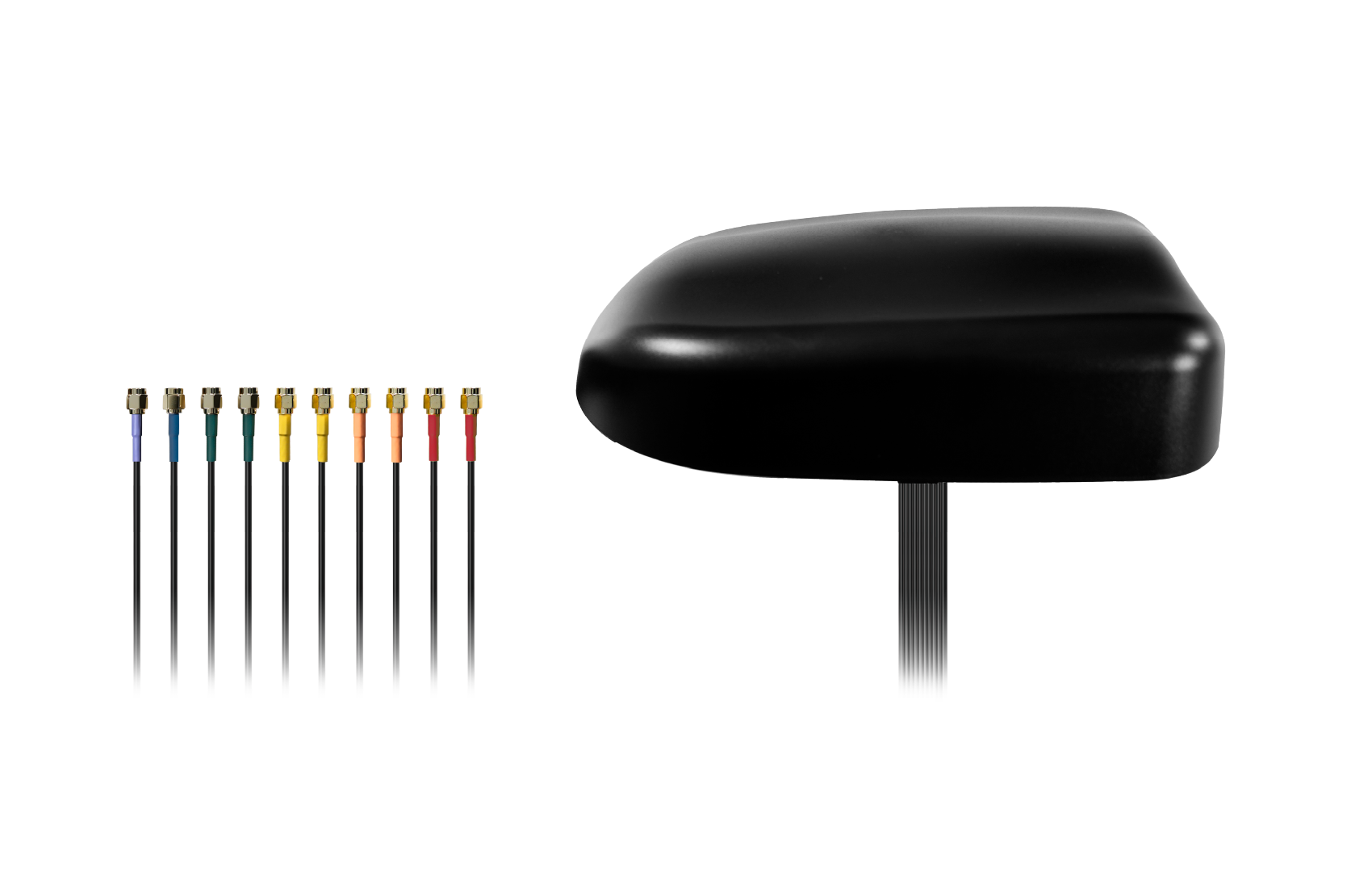
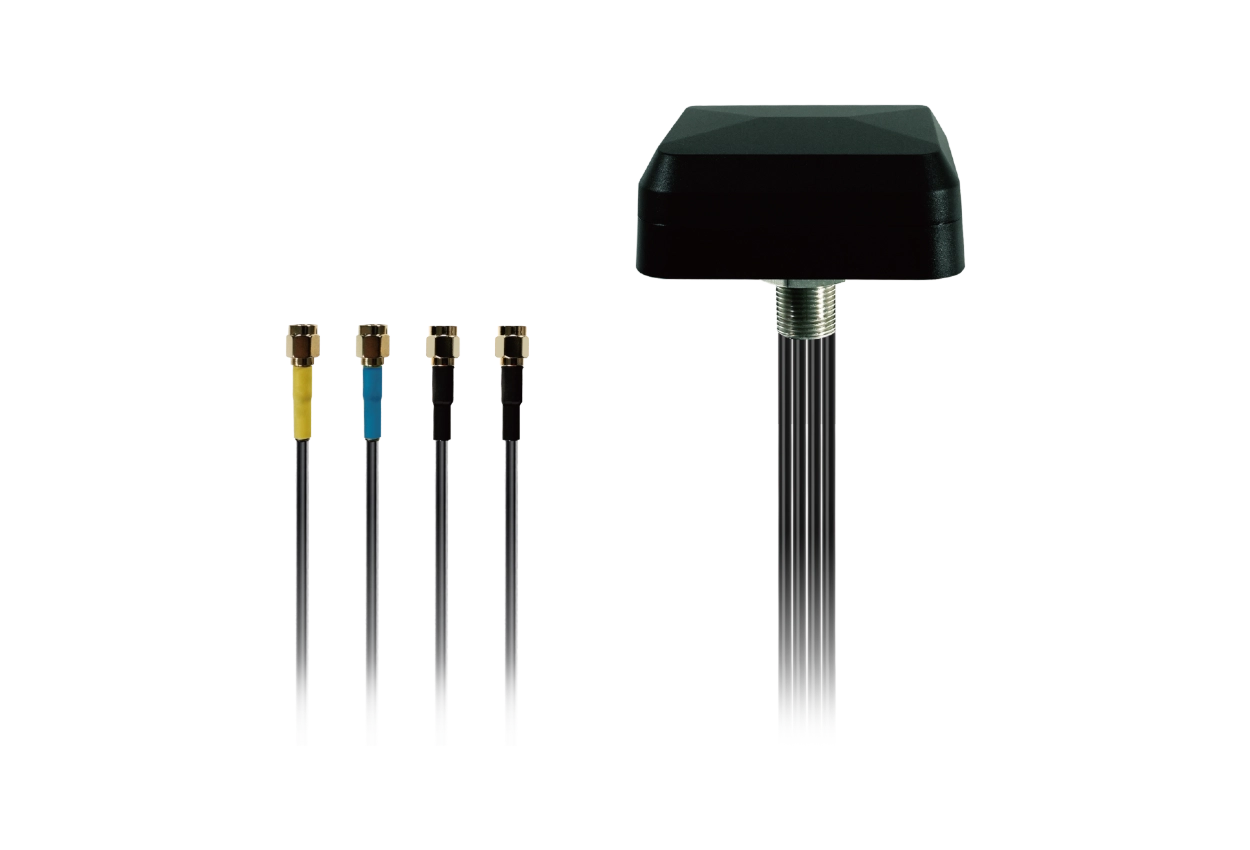
Public safety antenna requirements vary sharply by vehicle. Police cars need compact antennas that hold a connection through high-speed pursuits. Ambulances have more roof space but must avoid interfering with hospital equipment. Fire trucks must withstand extreme heat, and when responding to wildfires, keep working on remote, bumpy tracks with little cellular coverage. Given this complexity, choosing the wrong antenna risks dropped connections when it matters most. Expert guidance on selection and siting is essential to getting deployment right.
Looking ahead, growth of mission-critical services (MCX), 5G network slicing, and edge AI will all push data demands higher. Satellite and NTN backup capacity is also becoming standard for public safety antennas for when cellular networks fail. Read the white paper to discover the Quectel antennas built for this shift. For example, the YENA00L5AH is a 10-in-1 combo covering dual 5G, Wi-Fi, TETRA, and GNSS. Meanwhile, the YEMT901J1AH is a railway-certified 9-in-1 unit rated for the harshest conditions.
Relevant products


The white paper also explores how Quectel supports designers with 400-plus antenna engineers, 22 test chambers, and a full suite of antenna services, including design and siting assistance. This is on top of its range of more than 5,000 antenna products. Read the paper to find out how engineers can overcome design challenges with Quectel’s expert assistance as the public safety communications market races toward US$72 billion by 2031.