Single-board computers for IoT edge computing
Single-board computers (SBCs) for IoT edge computing put a complete computer onto a single printed circuit board. CPU, GPU, memory, storage, and connectivity sit together in one compact, integrated unit. The processing power thereby moves from the server room to the hardware in the field.
SBCs are increasingly relevant in IoT edge computing. Until recently, complex processing meant a cloud connection or dedicated server hardware. However, latency, bandwidth costs, data privacy and compliance requirements all now push in the same direction: local processing. The global edge computing market is projected to reach $479.97 billion by 2031, driven by demand for faster, more autonomous devices. For embedded developers and device manufacturers, SBCs have become the hardware foundation of this shift.
27%
Edge computing market growth up to 2035
$479.97bn
Global edge computing market value in 2031
36.9%
Edge AI market growth up to 2030
What makes single-board computers right for IoT edge computing?
The SBC’s principal advantage is integration. A single board carries the CPU, GPU, DSP, storage, and I/O ports that would otherwise require separate components and connectors. For teams building IoT edge devices, that consolidation therefore simplifies development and delivers practical benefits such as smaller enclosures and fewer assembly failure points. Crucially, simplified development reduces time to market significantly in an increasingly competitive commercial environment.
Modern SBCs also include dedicated neural processing units (NPUs) for on-device inference. NPUs run machine learning models locally, without cloud round trips. This produces lower latency for time-sensitive decisions: a camera classifying a production defect in milliseconds, or a gateway filtering sensor anomalies before they reach the network. It also means cloud computing costs are taken under control.
OS support is also important – so depending on the model, Linux, Android, Ubuntu, Debian, and Windows are all available across Quectel’s range. That breadth speeds software development and keeps the hardware compatible with existing toolchains and developer ecosystems.
Working with standardized SDKs also enables consistent performance, inter-device compatibility, and stability as IoT deployments scale in size. Our standardized SDK means AI algorithms can be deployed out of the box and managed consistently across every device in the range, reducing development time and the demand for specialist edge AI expertise.
By combining powerful processing, rich connectivity, and open ecosystems into a single, accessible board, developers can rapidly prototype, test, and iterate new ideas. This is particularly helpful in advanced applications such as robotics and intelligent edge devices.
Connectivity at the heart of SBC edge device design
A compute board without the right connectivity only solves part of the problem. The appropriate radio technology depends on the deployment: indoors or outdoors, fixed or mobile, high bandwidth or low power. Modern deployments increasingly demand always-on connectivity with seamless roaming and failover, so devices remain operational even when primary connections are lost. Choosing the right SBC for IoT edge computing therefore means matching not only the compute tier but also the radio stack to the application environment.
Relevant products
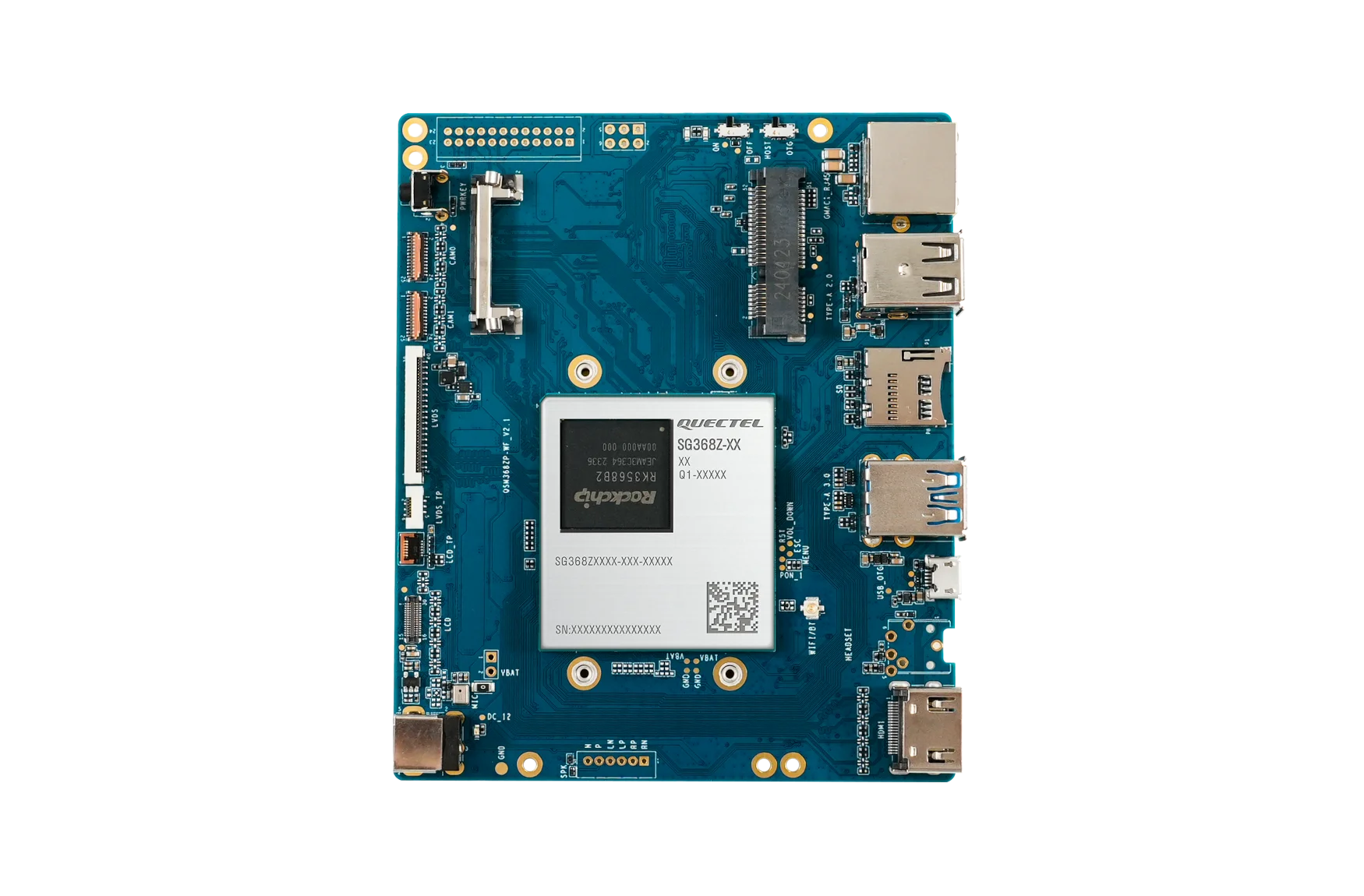
QSM368ZP-WF ARM platform
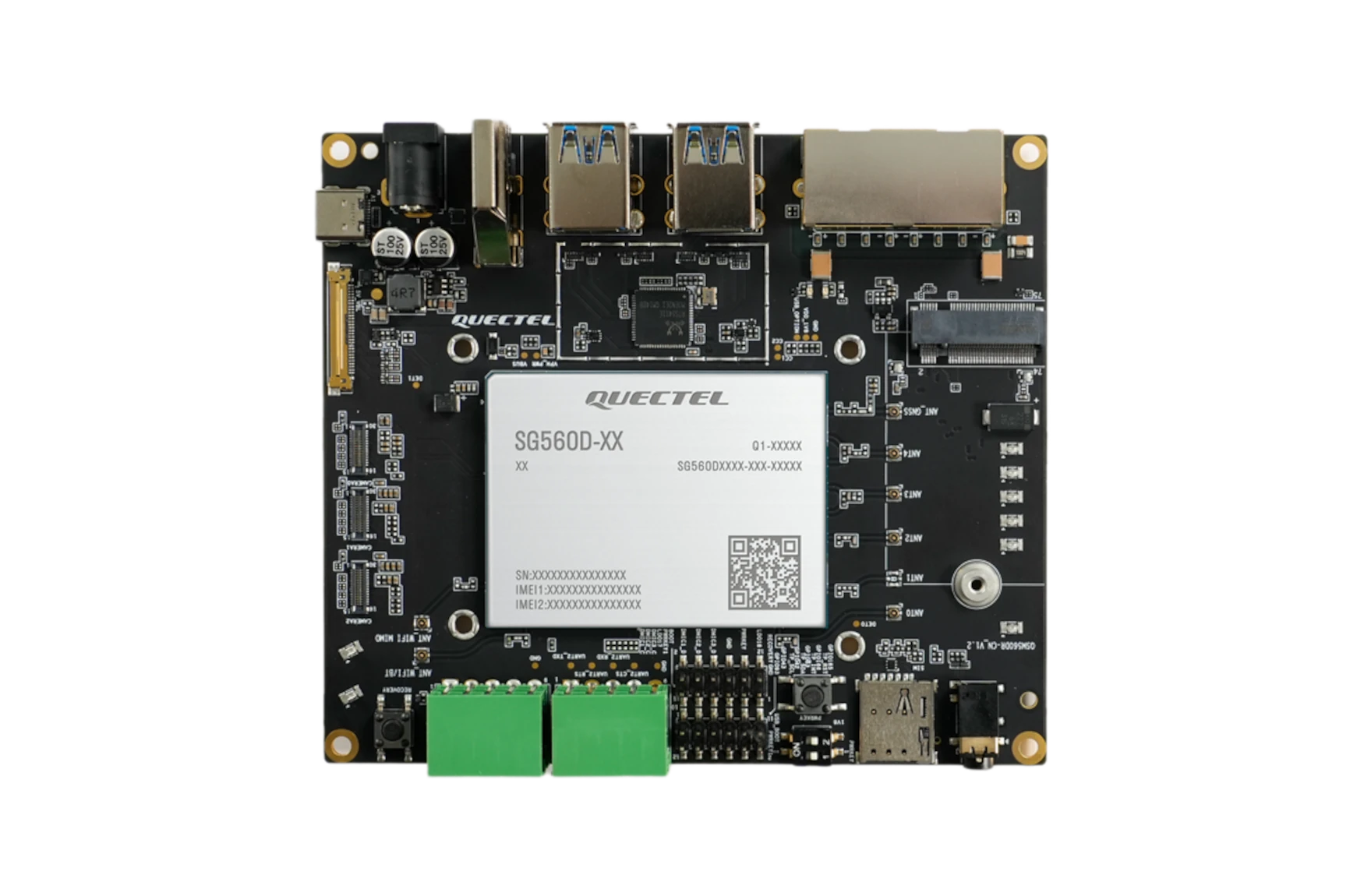
QSM560DR ARM platform
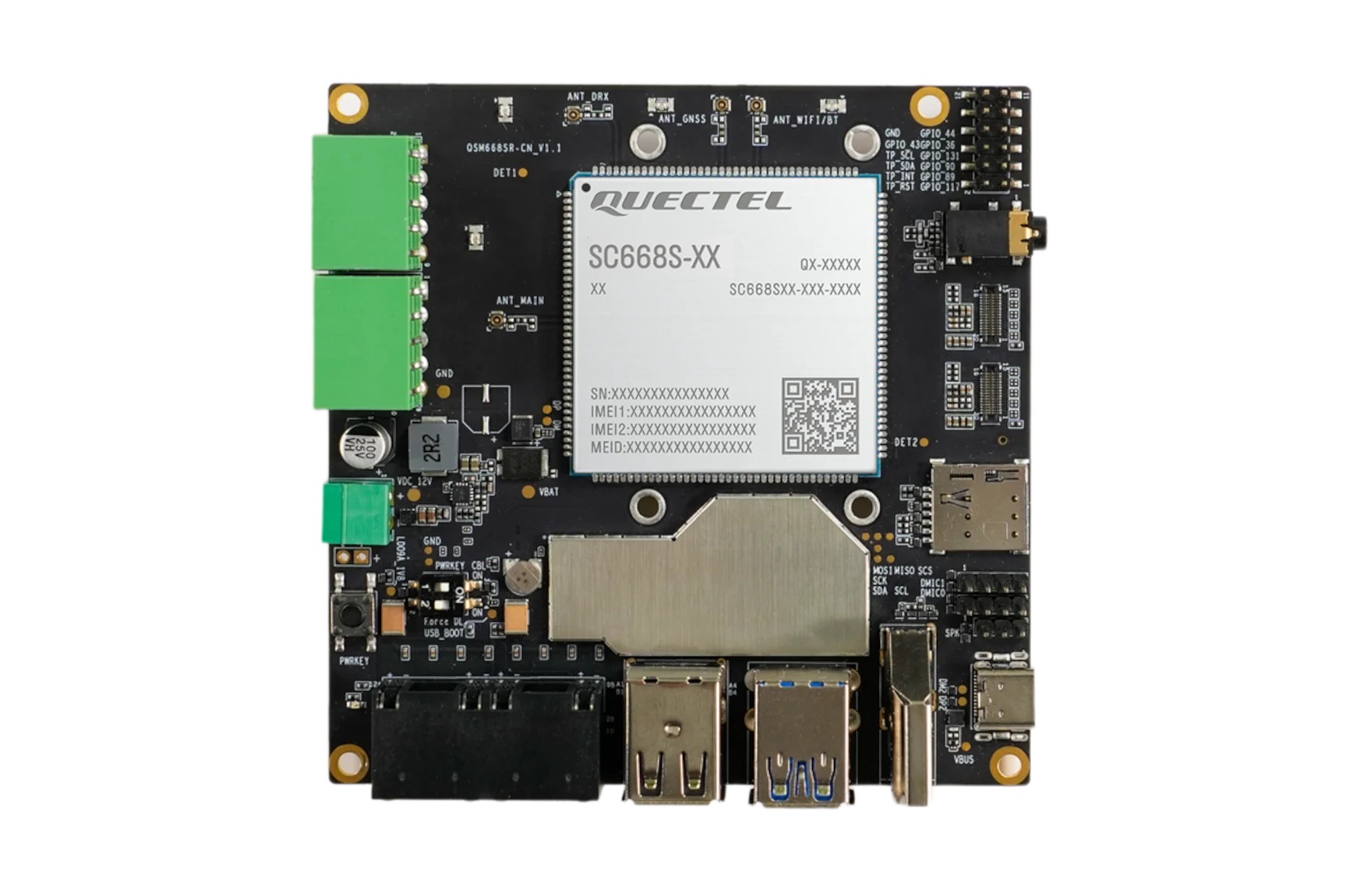
QSM668SR ARM platform
Quectel’s smart SBC range addresses this directly. The QSM368Z supports Wi-Fi 5 and Bluetooth 4.2 as standard, with optional LTE Cat 1, LTE Cat 4, Wi-Fi 6, and GNSS. The QSM560DR goes further with 5G NSA and SA alongside Wi-Fi 6E, with downlink speeds of up to 2.5Gbps. That throughput suits high-demand applications such as safety monitoring and retail analytics. The QSM668SR covers a broad middle ground with LTE Cat 4, Bluetooth 5.0, and optional GNSS for mobile industrial deployments.
The Pi M1 and L1 include LTE Cat 4 with optional GNSS, bringing cellular capability to a form factor previously limited to Wi-Fi and Ethernet. The Pi H1 targets more demanding edge inference workloads, with the Qualcomm QCS6490 processor and 8GB LPDDR4x memory providing the headroom for complex on-device models.
Edge IoT development demands more than just raw compute – Quectel provides:
A range of smart SBCs and Pi-series boards for every stage of development
Integrated connectivity across LTE, 5G, Wi-Fi, Bluetooth, and GNSS
Broad OS support across Linux, Android, Ubuntu, and Debian
Antenna design, ODM services, testing and certification support
Where SBCs for IoT edge computing are making an impact
Demand for edge-capable single-board computers is rising across sectors, as more industries recognise that local intelligence reduces both latency and operational cost.
Industrial automation and smart manufacturing
On production lines, SBC-based vision systems inspect components, measure tolerances, and flag deviations without sending image data offsite. NPU-equipped boards handle inference locally, so response times are measured in milliseconds. That matters for high-speed manufacturing, where cloud-dependent processing would introduce delays that break the feedback loop.
Beyond vision, SBCs act as intelligent gateways in industrial environments. They aggregate data from PLCs and sensors, process it on board, and transmit only the relevant outputs upstream. The result is lower bandwidth consumption and greater resilience to network disruption.
Connected infrastructure and outdoor environments
Digital signage, smart metering, and building control systems all need edge compute that runs without interruption under variable conditions. Quectel’s QSM560DR operates from -35°C to +75°C, making it suited to outdoor kiosks, roadside cabinets, and exposed industrial enclosures. The QSM368Z handles indoor deployments from -10°C, and the QSM668SR covers the -20°C to +75°C range for mixed-use environments.
Across all these deployments, over-the-air update support means firmware can be pushed without a site visit, keeping devices current throughout their operational life.
Relevant products
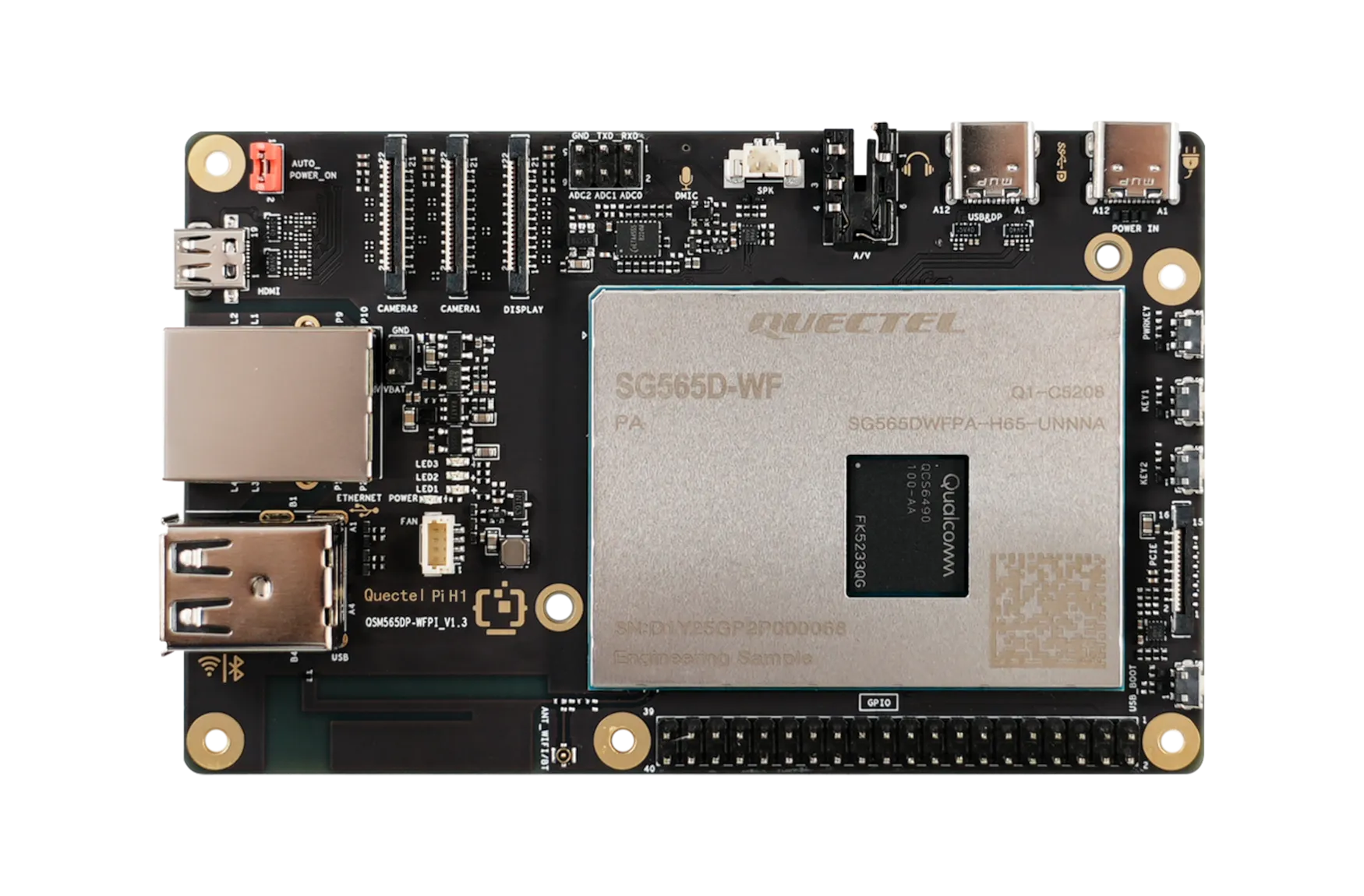
Quectel Pi H1 SBC (SG565D)
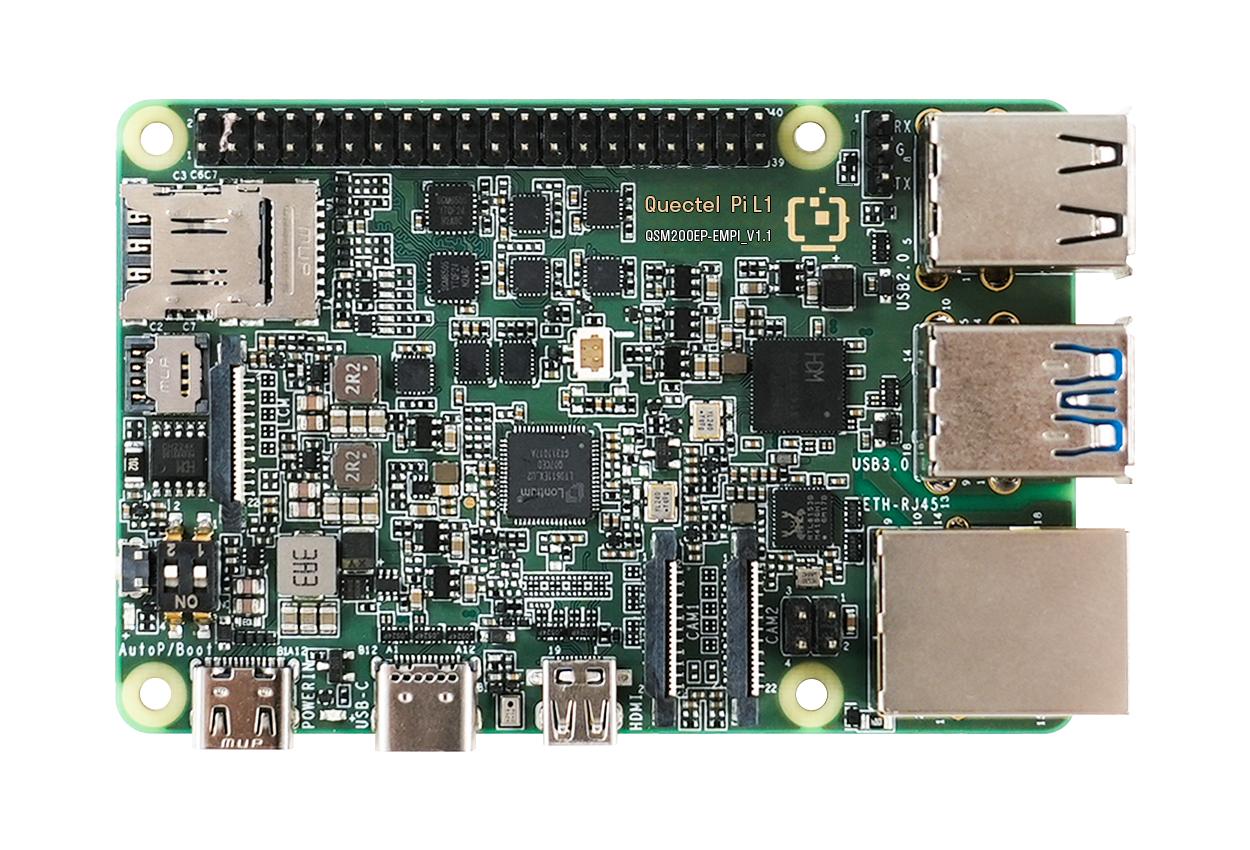
Quectel Pi L1 SBC
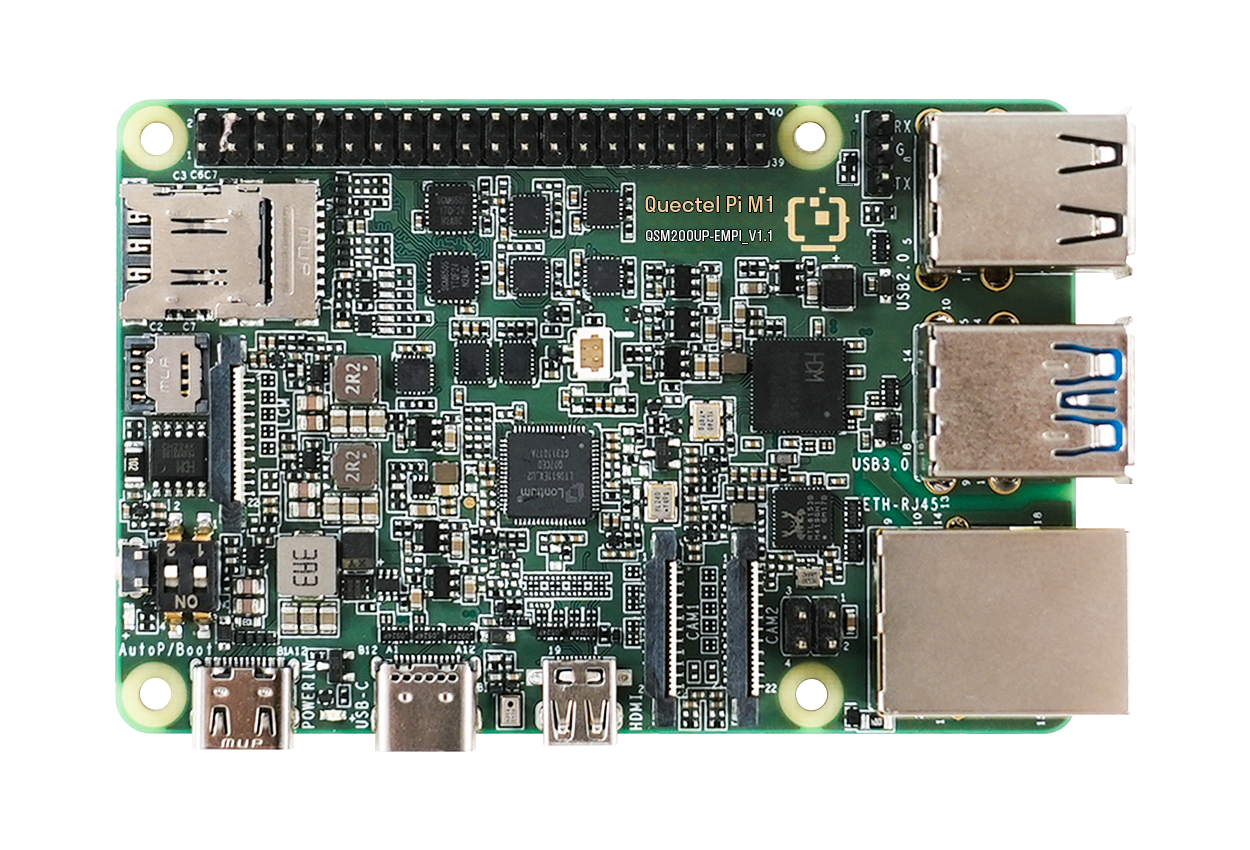
Quectel Pi M1 SBC
Building your next edge device with Quectel single-board computers
Quectel’s portfolio covers every type of SBC for IoT edge computing, each designed for a different stage of development.
The smart SBC range, comprising the QSM368Z, QSM560DR, and QSM668SR, targets production-ready deployments. Each board is fully certified and ready to integrate into finished products. Interface options include HDMI, USB, I2C, CAN, UART, RS232, RS485, camera inputs, and SIM, covering the peripheral demands of most industrial and commercial applications.
The Quectel Pi series, comprising the Pi M1, L1, and H1, is designed for the prototyping and development phase. These boards combine open-source tooling and familiar form factors with industrial-grade connectivity, including LTE Cat 4 and optional GNSS on the M1 and L1 models. The Pi H1 runs the Qualcomm QCS6490 at the higher-performance end of the range, with 128GB UFS storage and support for Linux, Debian, and Ubuntu.
Both families are backed by Quectel’s antenna range, evaluation kits, JDM and ODM services, and testing and certification support. With products, support services, and ISO 9001, IATF 16949 and ISO 14001 certified manufacturing facilities, one supplier can therefore take a project from initial prototype through to a finished, market-ready device. Whether the application needs tight edge inference, wide-area cellular, or both, Quectel’s range of SBCs for IoT edge computing covers the hardware requirement.