Single-board computers white paper
How single-board computers help IoT developers overcome the complexity of building and deploying intelligent edge devices
Read white paper
SBCs pre-integrate the hardware, software and connectivity needed to reduce complexity in development of edge AI devices for IoT
Engineers are under increasing pressure to develop IoT devices than can do more, locally. As industries demand real-time responses, local decision-making, and reduced cloud dependency, edge intelligence has moved from a differentiator to a baseline requirement. Developers are embedding AI processing directly into devices, enabling autonomous operation, lower latency, and greater privacy. Markets from automotive and IoT robotics to telehealth and digital signage are driving this shift, with on-device AI becoming central to how next-generation IoT products are designed.
Meeting these demands means integrating far more technology into a single device. This is where single-board computers (or SBCs) come in. Developers must now combine high-performance processors (CPUs, GPUs, and NPUs) with multi-mode connectivity spanning 5G, LTE, Wi-Fi, and LPWAN, alongside GNSS, cameras, displays, and AI frameworks. They must also do this while keeping products manufacturable, certifiable, and deployable at scale. The result is a significant increase in design complexity at a moment when speed to market is vital.
Developers are increasingly turning to single-board computers (SBCs) to unify multiple functions in a single device, provide the intelligence they need in current-generation edge devices, and hold the expectation of working with AI SDKs that ‘just work’ without going through endless documentation.
Integration complexity is one of the biggest barriers developers face today. Combining chipsets, operating systems, connectivity stacks, and AI frameworks from multiple vendors creates convoluted architectures that are slow to build and difficult to scale. Security and compliance add further pressure, particularly in sensitive sectors. Fragmentation across chipsets and device classes makes consistent performance across large deployments hard to achieve. Furthermore, fragmentation is a problem that worsens as deployments continue to grow and as product lifecycles extend.
Single-board computers address these challenges directly. By pre-integrating hardware, software, and connectivity into a ready-to-use platform, SBCs remove much of the design complexity that slows development. Developers can get started immediately, working with standardized SDKs and proven AI algorithms rather than building from scratch. Quectel supports development further with evaluation kits, software customization, and certification assistance. Additionally, flexible JDM and ODM manufacturing support give teams a clear path from prototype to production.
Relevant products
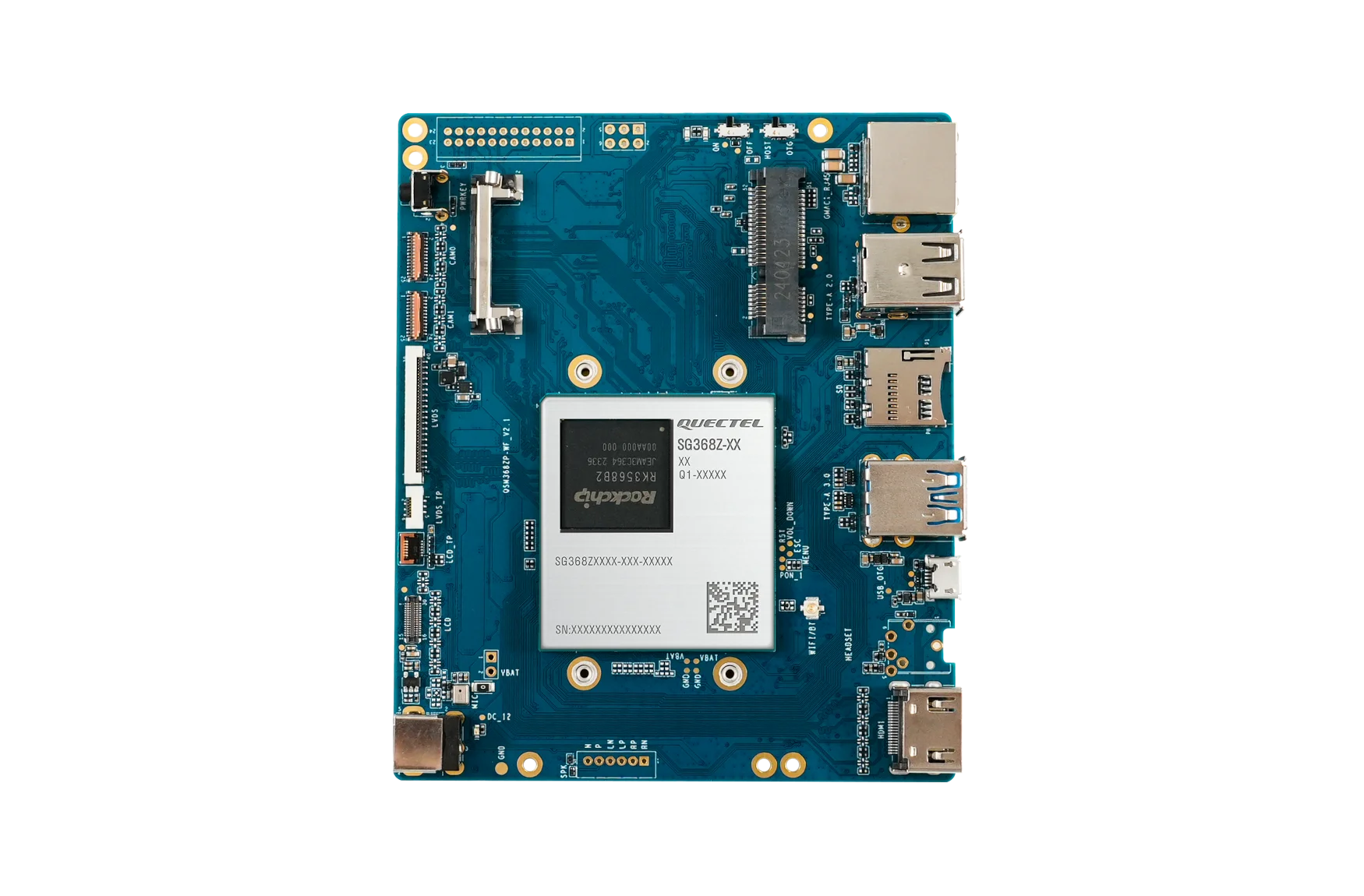
QSM368ZP-WF ARM platform
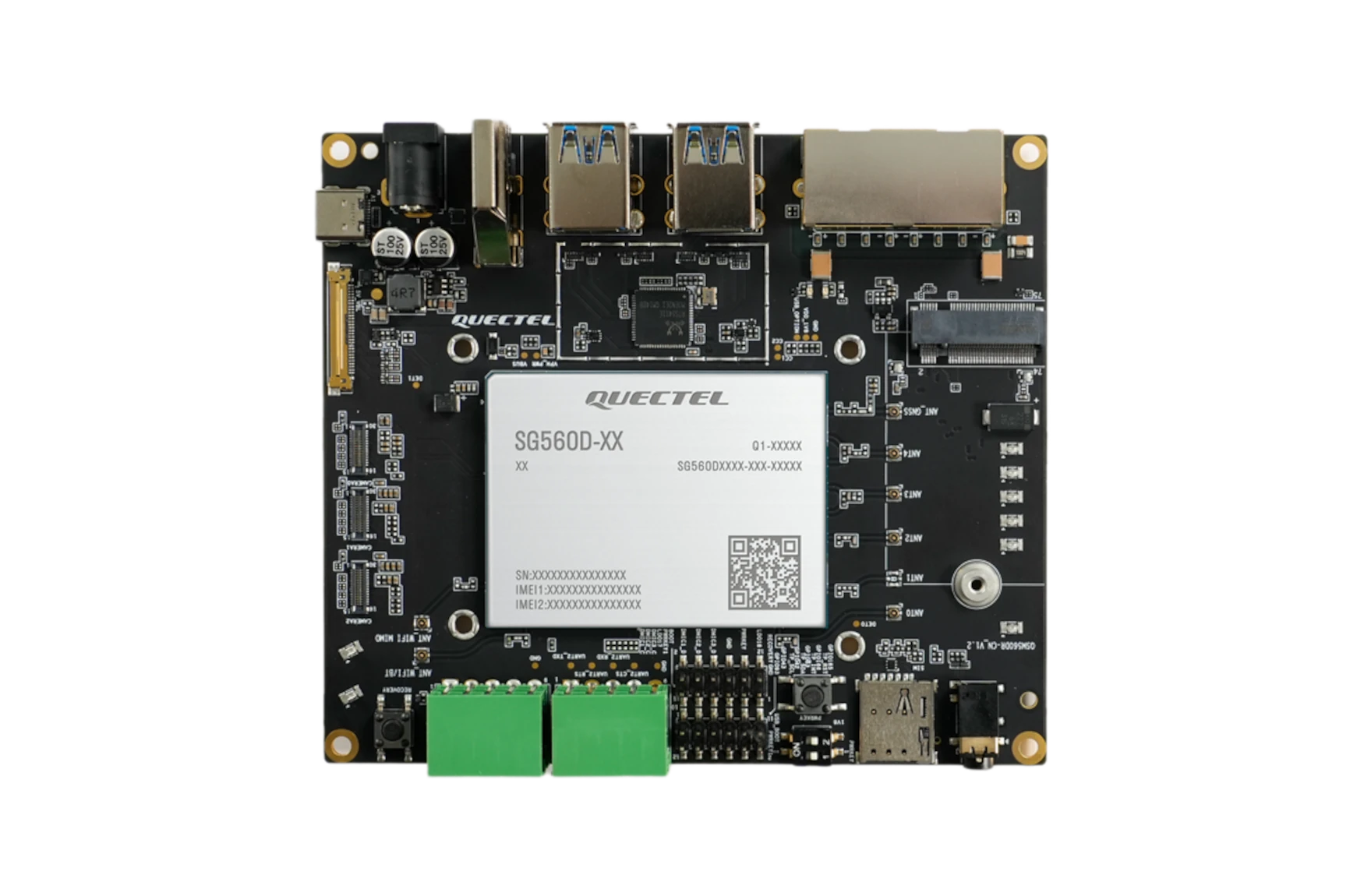
QSM560DR ARM platform
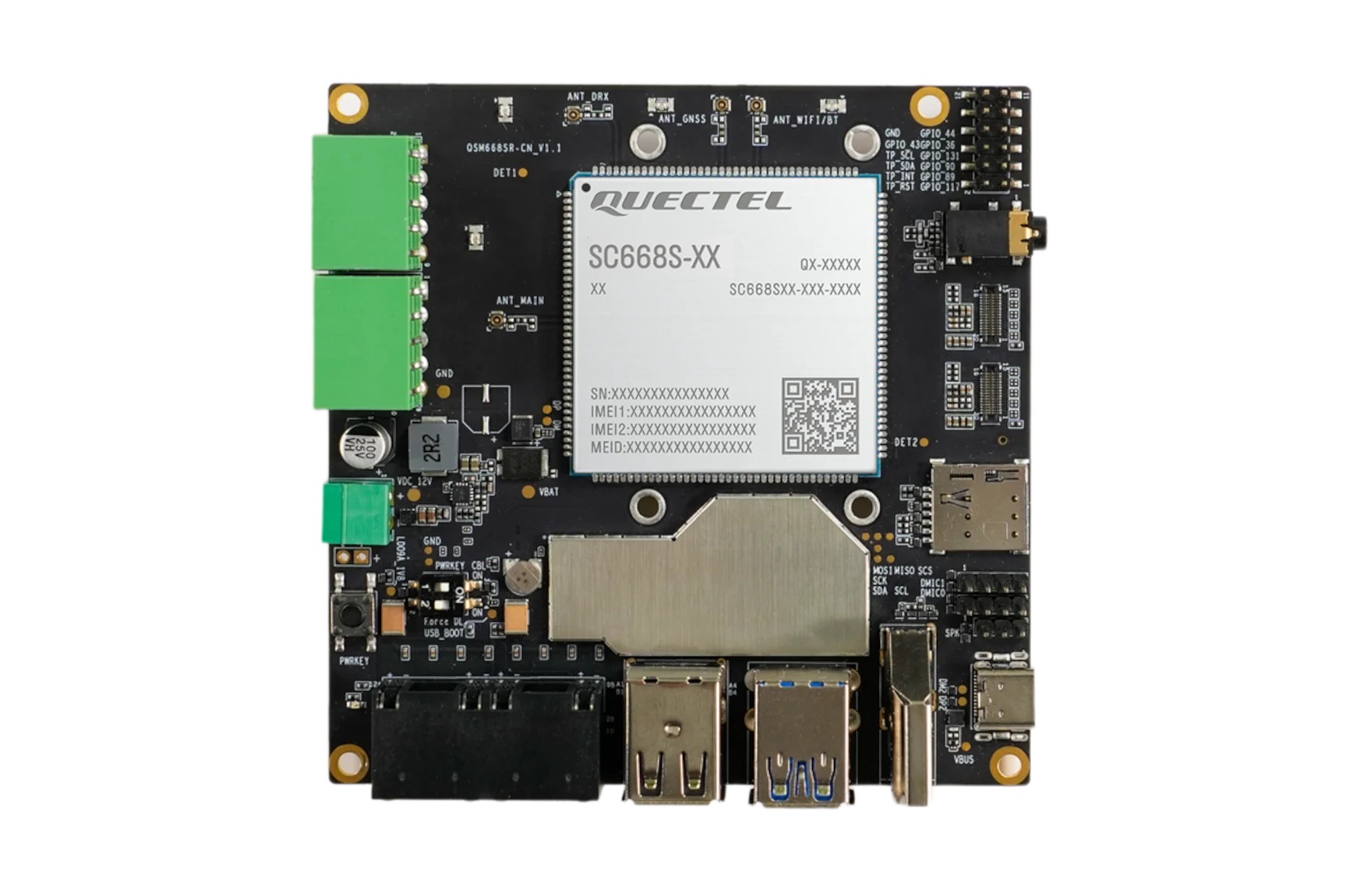
QSM668SR ARM platform
Read the white paper to find out how Quectel’s single-board computers and development support help teams move from concept to production more efficiently. Quectel’s SBCs come pre-loaded with high-performance processors, built-in connectivity, and support for Android, Linux, and Ubuntu. Value-added services cover hardware bring-up, camera and display integration, algorithm customization, and certification support. JDM and ODM models also mean Quectel can work alongside development teams or take full design ownership, with edge AI even applied on Quectel’s own production lines for automated defect detection.
The white paper also introduces key Quectel SBCs in detail. The QSM560DR, for example, delivers up to 12 TOPS AI processing, with 5G and Wi-Fi 6E connectivity, making it well-suited to smart manufacturing, robotics, and retail analytics. Additionally, the QSM882GP-WF offers up to 48 TOPS on a Qualcomm QCS8550 platform, targeting demanding applications including AR/VR, video conferencing, and high-performance edge AI computing. Find out more about Quectel SBCs and explore what they make possible for your next intelligent edge project.