M2M Telemetria chooses Quectel modules and antenna design services for NOX smart roadway and public lighting controller
M2M Telemetria is a Brazilian company specialized in the development of telemetry, Internet of Things (IoT) and M2M communication solutions. The company has selected several modules from Quectel to enable products such as NOX, its IoT controller for smart public and roadway lighting. M2M Telemetria projects are primarily focused on smart roadway and public lighting, as well as distributed energy systems, which present significant technical challenges related to cellular network coverage in Brazil.
Deployments often occur on highways, peri-urban areas and remote regions where telecommunications infrastructure is limited and signal quality may vary. Devices are installed on poles, luminaires and electrical panels, exposed to temperature variations, humidity, dust and electromagnetic interference. Low power consumption and continuous operation in harsh outdoor environments are key requirements.
“The BC680Z features compact dimensions, reducing layout complexity and optimizing space utilization. The BC680Z power supply supports a wide operating voltage range, which enabled simplified power architecture, eliminated the need for additional dedicated voltage regulation, and contributed to a more compact, efficient and robust design.”
Ronaldo Ferreira de Sousa, Chief Strategy Officer, M2M Telemetria
Founded in 2003, the company focuses on remote monitoring, automation and real-time management of distributed assets and critical infrastructure. M2M Telemetria operates across the entire value chain, from hardware and firmware design to cloud platform integration, delivering complete and scalable solutions. Its portfolio includes embedded IoT devices with cellular connectivity, including NB-IoT, LTE-M and LTE, as well as software platforms for data collection, visualization and analytics.
Opportunity NOX
M2M Telemetria’s solutions are applied in sectors such as road infrastructure, smart public lighting, energy and water utilities, enabling improved operational efficiency, cost reduction and data-driven decision-making. NOX has been developed for deployment in outdoor and critical infrastructure environments such as highways, urban roads and remote areas. The device integrates telemetry, electrical monitoring and remote lighting control, enabling real-time supervision of operational status, faults, energy consumption and electrical events, as well as dimming control. Installed directly on luminaires or lighting poles, NOX communicates with the cloud-based NOX Manager platform, enabling centralized asset management.
Using narrowband-IoT (NB-IoT) connectivity through the Quectel BC680Z module, NOX ensures high reliability and broad coverage, even in areas with limited telecom infrastructure. The Quectel BC680Z is a high-performance LTE Cat NB2 module that offers extremely low power consumption and compact dimensions of 17.7mm x 15.8mm x 2.2mm. These attributes make it ideal for smart lighting, road infrastructure and smart city applications.
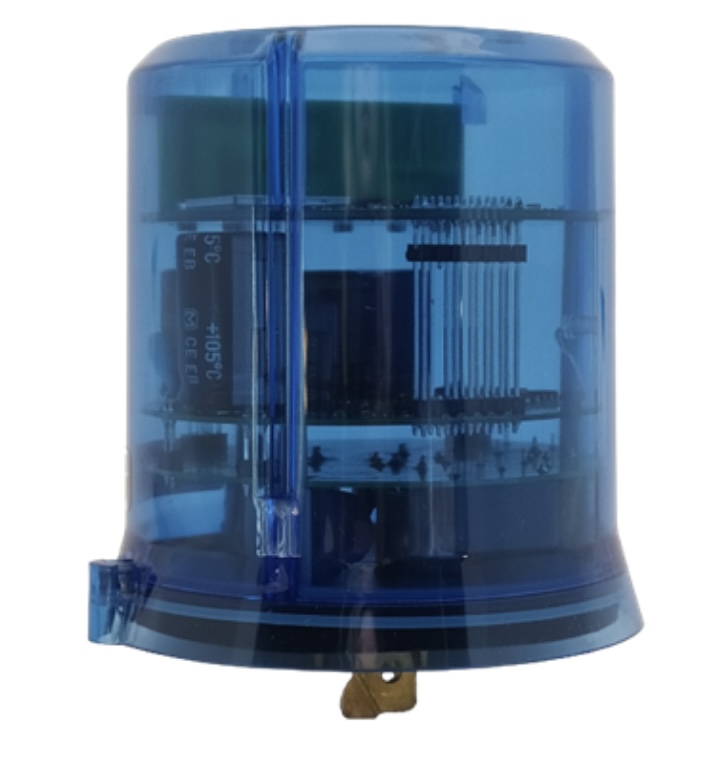
“The BC680Z features compact dimensions, which significantly contributed to the project design,” says Ronaldo Ferreira de Sousa, the Chief Strategy Officer at M2M Telemetria. “Since NOX is a small-form-factor device, this characteristic facilitated the integration and compatibility of the module with the other electronic circuits on the printed circuit board (PCB), reducing layout complexity and optimizing space utilization. The BC680Z power supply supports a wide operating voltage range, from 2.2 V to 4.5 V, which enabled a simplified power architecture. This reduced or even eliminated the need for additional dedicated voltage regulation, contributing to a more compact, efficient and robust design.”
INMETRO approval
“Our public lighting controller was the first device to receive INMETRO type approval and has also been approved by the majority of Brazilian electric power distribution utilities,” adds Ferreira de Sousa. “This certification framework enables end customers to implement accurate, metered-based billing of the electrical energy effectively consumed by the luminaires. To date, more than 500,000 units have been sold in over 40 municipalities throughout Brazil.”
The solution offers several benefits including accurate energy billing based on actual consumption, eliminating estimates derived from average consumption values; support for luminaire dimming, increasing network efficiency and reducing overall energy consumption; detection of power outages caused by cable theft; and detection of over-voltage conditions on the electrical network.
Relevant products

LPWA BG95 Cat M1/Cat NB2/EGPRS series

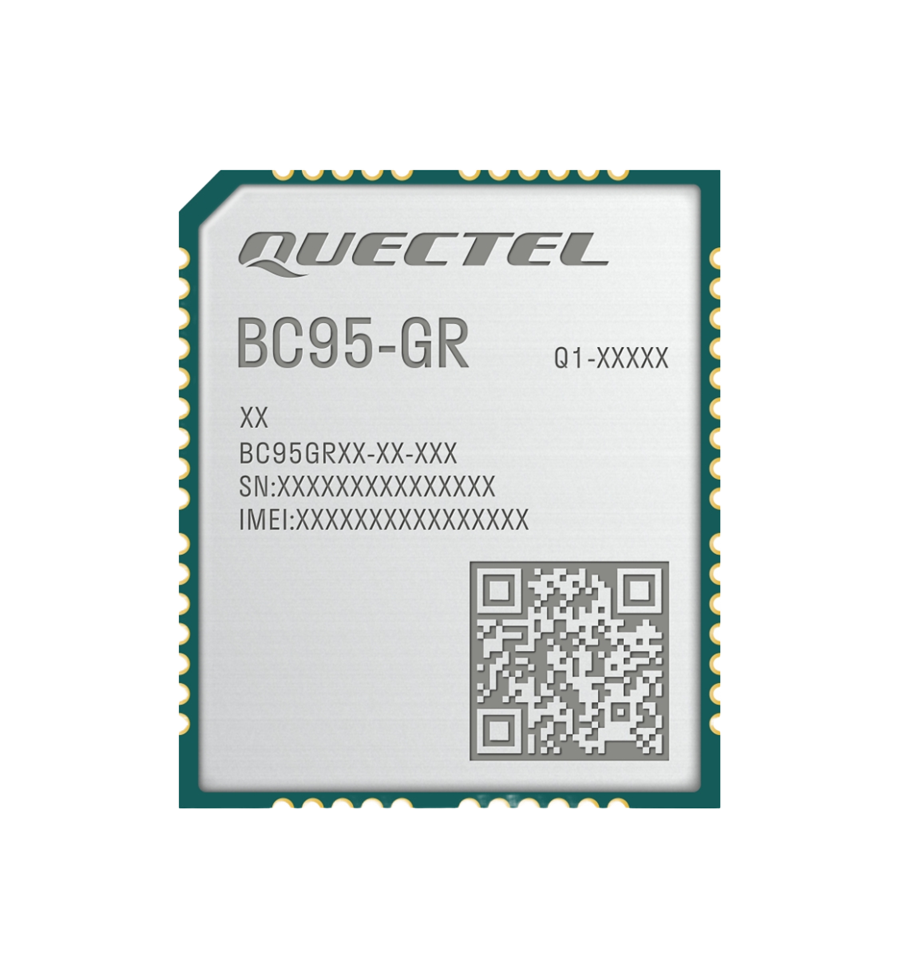
LPWA BC95-GR
M2M Telemetria has experienced excellent network performance and high signal sensitivity which is essential for applications in areas with limited cellular coverage, such as highways and peri-urban regions. In addition, the module has enabled low power consumption and advanced support for power-saving modes which are critical for field-deployed devices requiring continuous operation and long lifespans.
Technological maturity
Quectel’s broad and flexible product portfolio, enabling the selection of the most suitable technology for each application, such as NB-IoT, LTE-M and LTE Cat-1, supports use cases from ultra-low power to high data demand and extensive certification and compatibility with Brazilian operators help reduce regulatory risks and enables large-scale deployments. M2M Telemetria highlights Quectel products’ technological maturity and proven field performance which ensure greater predictability and reliability for projects.
M2M Telemetria uses several different Quectel modules to meet varying requirements in connectivity, power consumption, bandwidth and processing capability, ensuring flexibility and scalability across its IoT solutions portfolio. In addition to using the Quectel BC680Z module to support NB-IoT optimized for low power consumption, the company utilizes Quectel’s BC95-GV, low cost, robust, energy efficient NB-IoT module, the Quectel BG95M2 LTE-M and NB-IoT module for applications that require higher bandwidth, lower latency or multi-technology support, and the Quectel EC200A-AU LTE Cat-1 module for use cases with higher energy demands such as energy metering telemetry projects.
“We’re delighted that M2M Telemetria is utilizing modules from our extensive range to ensure reliable, efficient and scalable operations across smart public lighting, road infrastructure and energy projects,” says Ricardo Simon, Sales Director Latam, Quectel Wireless Solutions. “Our modules offer stable and robust capabilities for mission-critical, always-on applications and it’s great to be working with M2M Telemetria on its large-scale deployments.”
Operational efficiencies
M2M Telemetria reports that its solutions help customers with increased asset availability, with operation rates above 98–99%, which is critical for roadway lighting and road infrastructure. Reduced energy consumption of control devices helps to enable a lifespan of more than 5–10 years in NB-IoT and LTE-M-based equipment and robust design helps reduce field crew dispatches, lowering logistical costs, operational risk exposure and CO₂ emissions. In addition, the company’s solutions have proven scalability, enabling the management of thousands of distributed points, such as luminaires, controllers and meters, from a single platform. This improves operational efficiency for utilities and operators, who are supported by historical data and performance indicators for planning, predictive maintenance and decision-making.
Relevant resources

“Quectel’s modules combine advanced quality with competitive pricing, which gives us confidence in the supply of our products and ensures the quality of our projects,” says Marcelo Couto, electronic engineer at M2M and the company’s hardware development lead.
The company selected Quectel for its cost-efficiency, strong product availability, reliable connectivity and flexible portfolio. In addition to the modules, Quectel has supported M2M Telemetria with LTE/GNSS antenna design services for the NOX product. M2M Telemetria also reports that the Quectel BC680Z has contributed to a 20% reduction in size of NOX project devices.