How SoMs help engineering teams accelerate product development and reduce design complexity
As IoT devices feature greater capabilities and become autonomous systems that utilize AI, the bill of materials (BOM) payload has increased significantly to include processing, memory, power management, and connectivity. Specifying discrete components for each of these functions adds to the integration burden, creates purchasing and supply chain challenges, and takes up additional space in often-constrained device form factors. This results in longer development time, greater manufacturing risks, and lack of flexibility because one capability cannot be upgraded without considering the impact on other components.
A system on module (SoM) addresses all these difficulties because it brings together the core components of a system onto a single printed circuit board (PCB). A SoM has been designed to pre-integrate processing units, memory, power management, and connectivity to take away the need for complex, customized circuit board design. Developers simply select a SoM, which contains ports, physical connectors, and peripherals that the use case needs, all in one component.
The benefits of SoMs are amplified in complex and demanding use cases where time-to-market pressures can be intense. The high level of integration, simplified design process, reduced development effort, and easy scalability of SoM-based platforms transform engineering cycles and eliminate pressures associated with sourcing multiple components. Purchasing can be streamlined, and manufacturing interruptions from supply chain issues, such as for memory components in the current shortage, can be alleviated.
Relevant products
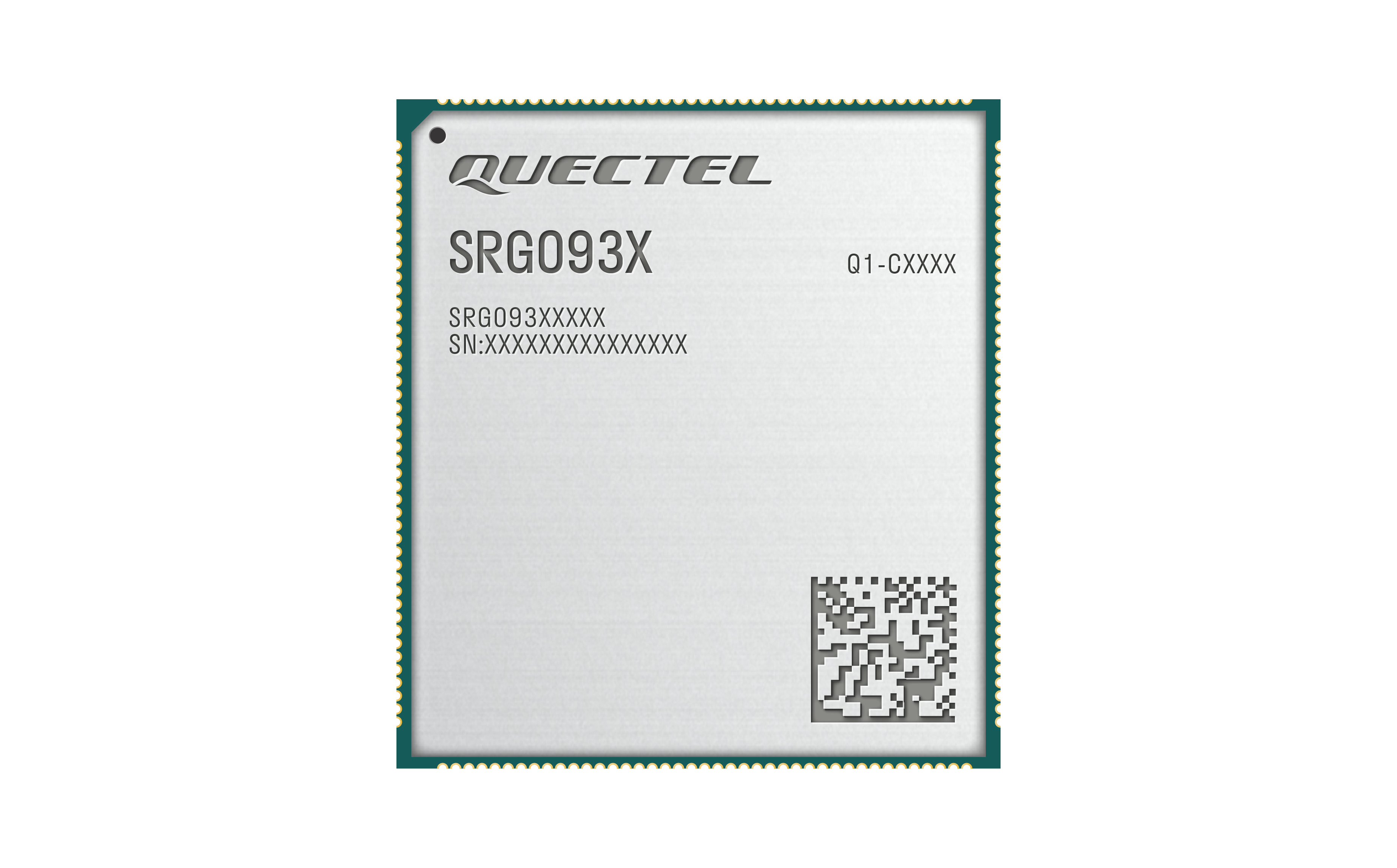
SRG093X NXP i.MX93 SOC module series
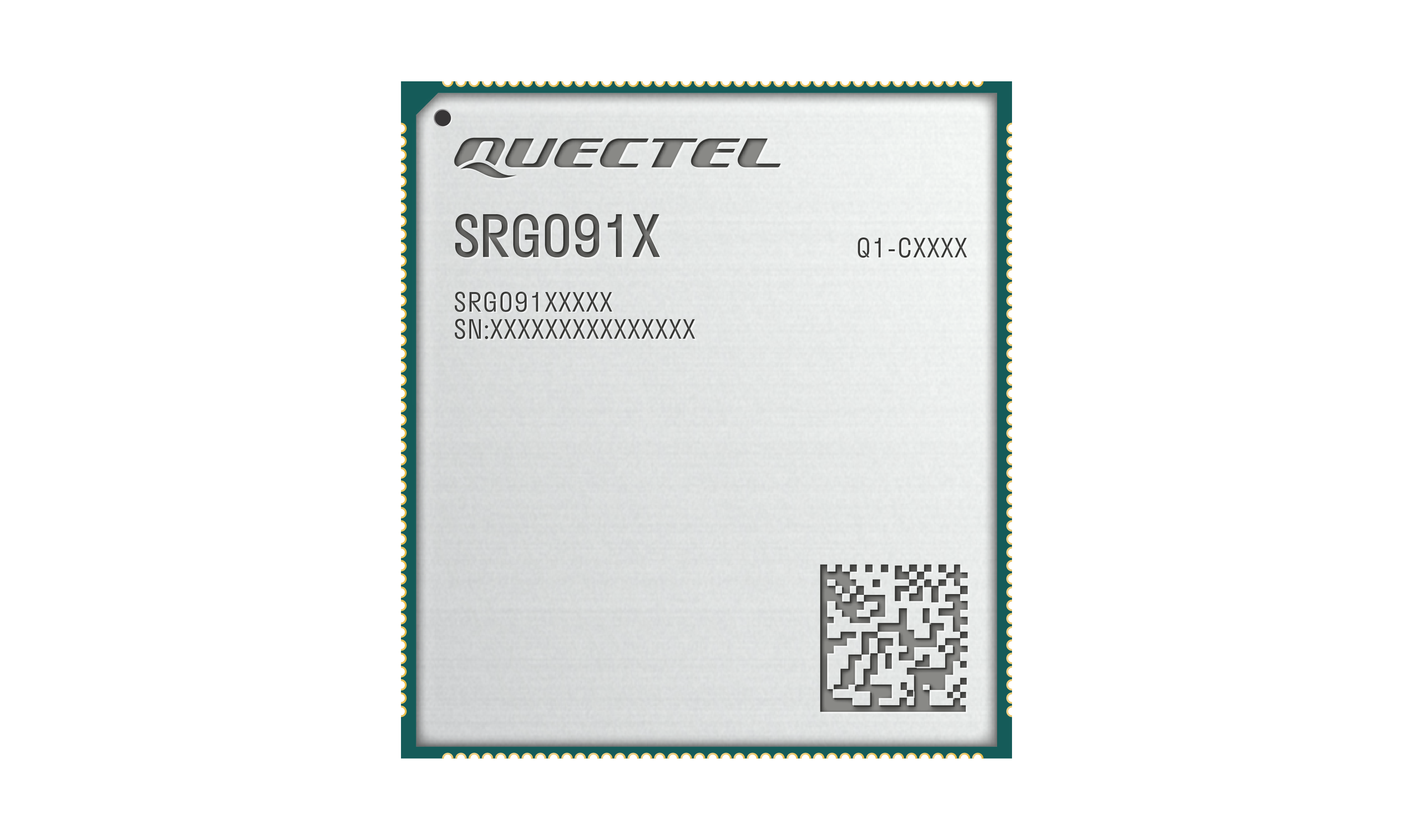
SRG091X NXP i.MX91 SOC module series
Frictionless integration
The system on module (SoM) vendor takes all these complexities away and delivers a fully-functional, integrated SoM as a single component that can be incorporated into device designs without friction. SoMs, such as the Quectel SRG091X and SRG093X, bring together high-performance processing power with embedded memory, multiple connectivity options, and comprehensive peripheral interfaces, providing the essential platform for increasingly capable IoT devices.
Use cases such as industrial automation benefit from SoMs because of the processing demands of systems such as programmable logic controllers (PLCs), industrial edge gateways, and vision-guided robotics. These environments demand long lifespans with minimal downtime. A machine vision application, for example, needs to be able to support high-speed video processing so defects can be identified early.
Intensive activities such as real-time motion control also play to SoMs’ strengths because the SoM that is specified can integrate multiple cores, so a primary CPU can be integrated alongside a real-time core. This is essential for enabling deterministic control for robotic arms on assembly lines, for example.
Gain an edge
The Quectel SRG091X is ideal for industrial applications that require high-level automation because it is built on the NXP® i.MX 91 applications processor, which integrates an Arm Cortex-A55 CPU core, and is integrated with the IW610G connectivity solution. The SoM features 1GB LPDDR4 and 8GB eMMC memory as a default option and users can specify alternative memory sizes in both DDR4 and eMMC. In addition, the SoM includes Wi-Fi 6, Bluetooth 5.4, Thread, and Zigbee connectivity. Equipped with a programmable image sensor interface supporting resolutions up to 2K, the module is capable of running deep learning algorithms to meet the demands of smart terminals and industrial edge devices.
In smart buildings and homes, SoMs have multiple applications. For heating, ventilation, and cooling (HVAC) systems, SoMs effectively act as a localized controller, enabling temperatures to be adjusted in active zones or powered down in empty rooms. The system on module (SoM) processes occupancy data and CO2 levels to enable automated adjustments.
SoMs are also used to monitor building assets to enable predictive maintenance. Elevators, pumps, and chillers rely on a SoM to analyze thermal and vibration data from sensors on the asset in real-time and then to send alerts to building management systems. SoMs are also utilized for smart access control and security.
Optimize operational outcomes
Telehealth is another growing area for SoM adoption as telehealth kiosks offer richer medical services that rely on integration of more peripheral medical devices, such as blood pressure cuffs and thermometers, alongside high-definition video to aid diagnosis. In portable diagnostic devices, SoMs support handheld, battery-powered medical tools such as ultrasound devices or digital stethoscopes. SoMs help to optimize power consumption, ensuring longer operational time, and enable processing of raw medical data on the device.
System on modules (SoMs) are also able to support the application of AI for enhanced diagnostics. For example, machine learning models can be run that detect issues such as abnormal heart rate from wearable devices, without relying on remote cloud servers for data processing.
In smart energy, SoMs are increasingly used for smart buildings and microgrid coordination. In these situations, SoMs are used as a central communication hub with processing power utilized to analyze data and optimize energy consumption based on occupancy, weather, and grid tariffs. This has become especially important as buildings become a source of renewable energy and residents rely on increased power availability for functions such as electric car charging.
Intelligence and integration
SoMs are used to support functions such as peak shaving, the discharging of battery power during high-cost grid hours, and load shifting, which schedules heavy appliance usage for times when solar or wind generation is high. The intelligence needed, plus the integration with peripherals and sensors, is all enabled by SoM functionality.
The Quectel SRG093X is ideal for use cases such as EV charging systems, built on the NXP® i.MX 93 applications processor and integrated with the IW610G connectivity solution. The processor integrates a high-performance dual-core Arm Cortex-A55 CPU operating at up to 1.7GHz, along with a Cortex-M33 microcontroller running at up to 250MHz. The module also features 1GB LPDDR4X and 16GB eMMC memory as default options with the possibility of alternative setups in the sizes of DDR4 and eMMC memory. In addition, the module offers Wi-Fi6, Bluetooth 5.4 and Thread and Zigbee connectivity options.
As greater intelligence is added to devices, with more edge-based processing and analysis of inputs, it makes sense to engineer-in flexibility by specifying a system on module (SoM). The additional benefits of simplified sourcing and elimination of supply chain fragmentation can accelerate time-to-market and relieve pressure on internal resources. The system on module does exactly what its name suggests; it delivers a system for processing, memory, power management, and connectivity, all on one modular component.